Tales of Yesteryear
(Or Cadet Capers)
If you have a Cadet Caper that you would like to share with your Classmates or you have a comment/addendum to a tale you see here
Send it HERE .
.
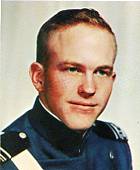
Bob Odenweller
USAFA '60
I've wanted to tell this one for a long time.
In my visits over the last couple of decades, I've noted what seems like a lack of wing spirit and detected what might be apathy, or at least an absence of spontaneity among the cadets. Perhaps it is there, but it also seems as if a lot of it might have been crushed in the way the mood of the country has shifted to being over-protective.
Whatever the case, I felt that it would be worth preserving the way we behaved in the earliest days, and particularly to let the wing be aware of it (in Checkpoints). I can imagine that there might be some who might feel that it would be subversive to let them know that such a thing as stealing an airplane was once done spontaneously, fearing that this might spark some "unsafe" activity. Nevertheless, I'd think that it might be best to appear in a place that it would be available for the wing to read, for enjoyment and appreciation of us pre-geezers in the days of yore.
Secondarily, I'd think that Checkpoints might find it a fun article to run, away from the class stuff, but that would reach grads more than it would the current wing. I'd suggest that we try seeing if Ron Deep, Jerry Daily, Russ MacDonald and Dave Wiest might have participated and remember other details.
The Great Airplane Heist
By the end of summer, 1956, the USAFA Class of 1960 had been subjected to a thorough indoctrination of character and training. With the onset of academic classes, the physical and emotional stresses cooled to a boil.
On the evening before our first football game of the season it was a very pleasant evening. The entire wing had gathered in the quadrangle that was surrounded by the various two-story dwellings referred to by some as "seven minute shacks," noting that within seven minutes of being set ablaze they would be nothing but ashes at ground level. A familiar face appeared at the second story fire escape of one of the Fifth Squadron buildings, an Air Training Officer most noted for leading the "Spirit of the Bayonet," Lt. Joe Yeager.
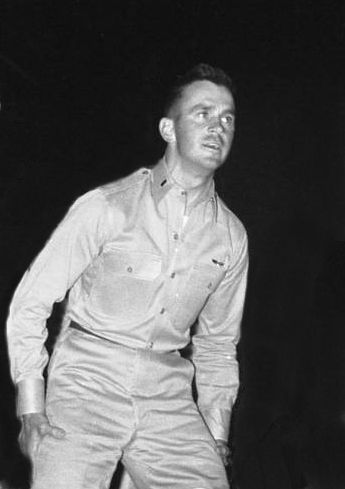 He paced back and forth in the confines of the railing of the upper level of the fire escape, a cat knowing that outside lay something better than where he was. He gripped the wooden rail and addressed the Wing. "Men," he exhorted, "tomorrow we engage in battle." He went on about the fields of friendly strife, but grew more agitated as the time went on. With the warmth of the evening, he stripped off his shirt, down to his tee shirt. The Wing was in his hands.
As I stood by the old barber shop, almost diagonally opposite the area of the Commandant of Cadets' office, happily known as the "Comm shack," a Major from the commandant's office was standing near me and remarked, "that man really knows how to control a crowd." I responded, "Sir, he does more than that." At that point, Yeager could have pointed at someone and said, "take him out of the area," and many eager forms would have followed his direction.
When the wing broke up for taps, none of us could sleep. Quietly, various members of the Class of 1959 came by to ask if we were willing to embark on a "mission." We agreed readily and were told to get rigged in night-fighting combat gear. Shortly after, we left the back door, on the side opposite the quadrangle, and raced quietly down the back side to the parade ground. There, we went, heads low, diagonally across the parade ground toward the far side of the academic complex, a group of three buildings arranged in a "C," with the open part facing the parade ground.
Behind and left of the leftmost building was an area of overgrown weeds, beyond which was a rather pitiful, in retrospect, static display of airplanes; a T-6 trainer, a P-51, and an F-84C. Our objective was the P-51.
Just as we were getting close to the static display, a Jaguar XK-120 with the top down came driving slowly, without lights, along the back side of the academic complex. One individual was driving while the other was perched on the back of the car, which had the top down. It stopped short of the field of high weeds and we all flattened to the ground. The two ranking members, led by John Melancon, took up seated positions on the side farthest from the car, where large pieces of scrap metal hid them from the car. The two inhabitants of the car came out, one on each side of the scrap metal, and appeared in front of the seated leaders. Melancon said quietly, "Group, 'ten hut!" but didn't move. The two ATOs talked, as if to themselves. One said, "Did you see something out here?" The other responded, "I'm not sure," to which the other said, "I hope they don't intend anything harmful." Melancon nodded to assure them that nothing harmful was intended. Slowly, the rest of us rose silently up to a standing position, surrounding the ATOs, which they suddenly noticed. They realized that there was nothing to fear, but eventually said, "I didn't see anything here, did you?" The other responded, "no," and they went back to the car and drove off.
We proceeded to the static display and found that the P-51, our focus, had flat tires and was chained to the ground. Disheartened, we saw that the T-6 was not only free of chains but also had reasonably full tires. It was easy to push and we moved it along the back side of the academic area, fairly straight ahead from the static display area. Things were going well. Just as we were making a right turn at the end of the academic area to go towards the quadrangle and the Comm shack, one of the group noticed a truck with lights off that had been lurking at the far end of the academic area. As soon as we cleared the road with our turn, it came up and out stepped some Air Police, with hands uneasily near their guns. One asked, "Who's in charge here." Poor John Melancon said, "I am." They said, "come with us." They went off to the Provost Marshal's office.
In the meantime, we had little more to do than to continue moving the airplane where we wanted it to go, to the back of the Fifth Squadron buildings. As we approached the next road intersection, however, two more Air Police trucks pulled up and we figured we were in trouble. Not so. Two APs got out and stood at parade rest, prepared to stop traffic at that late hour, if it might have interfered with our movement. Melancon joined us and we could only wonder what story he must have told the Provost Marshal.
We proceeded beyond the Comm shack, turned left and parked the airplane with its tail on Fifth Squadron turf. The night was young, and someone said, "Let's get the F-84!" Buoyed by the apparent acceptance by the "authorities," we went directly back to the static display and started to move the F-84. Before we got very far we started to comment that the "C" in the F-84C nomenclature was due to its strong likelihood of being made of cement. It was heavy. It had straight wings and wing tip tanks, which would have made a problem going the back way behind the academic complex, with its closely spaced telephone poles, so we decided, with the "acceptance level" to go in front, between that and the parade ground.
Things went well, and when we reached the point at the middle of the front of the academic complex, Lt. Joe Yeager appeared in a truck and said, "Do you men need help?" We allowed that it might be nice to get a tow, but the rope he had available was not up to the task and snapped. We continued to push, and he disappeared.
By time we turned the corner at the Comm shack, we were tired. We backed up the F-84 so that the tailpipe was inches from the Commandant's window. If it had had an engine installed and if that engine had been started, it would have gutted the office. I stretched out on the right wing to take a short nap when the Major I had seen much earlier appeared. He saw Melancon and said, "Come with me; all these men are on report." The second after they disappeared inside the office door, not a creature could be seen moving within 100 miles. When the two reappeared, the empty scene must have been quite discouraging to the major.
I am told that he did a bed search of the entire wing to find the miscreants. Only Melancon was nailed. I'm not sure what happened to him, and though the rest of us were fiercely supportive of him he said, "It was worth it."
Much later we discovered that, in an abundance of enthusiasm for the moment, Yeager had taken a fully fueled and armed F-100 from the other side of the flight line and towed it across an active runway. For all his efforts, he was sent to pilot training to be gone for the rest of the football season.
Subsequent years saw other airplane thefts, but none is as likely to have been as spontaneous nor as exciting as this one.
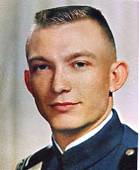
J.T. Smith
USAFA '60
How The YF-100 got to the Academic Building Lawn
This tale is much like Bob's acount of the T-6 - F-84 Caper. I had only a minor part in the event, and, sadly, most of the details have not survived the ravages time have visited on my memory module. Nonetheless, a brief narative seems appropriate.
One evening, I heard some muffled voices in the upstairs hall of Bldg. 878, the Lowry home of 2nd Squadron. Several ATOs were assembled there, and they were talking about needing some assistance with a mission. I and several of my Squadron mates volunteered. We marked our "Cards" UNAUTHORIZED and ventured out with the ATOs into the night.
Parked behind 878 was what I think was a '57 Chevy convertible. The ATOs got in and beckoned Jim Anderson to get in with them. Our instructions were to post to the stub runway/taxiway on the East side of the active runway and stay out of sight until needed. This we did and commenced our vigil; we still did't know the exact nature of the "mission."
After what seemed like hours--but was more like 30 minutes--of waiting, we saw the Chevy, lights out, coming slowly toward us on the taxiway. And behind it was one each YF-100A.
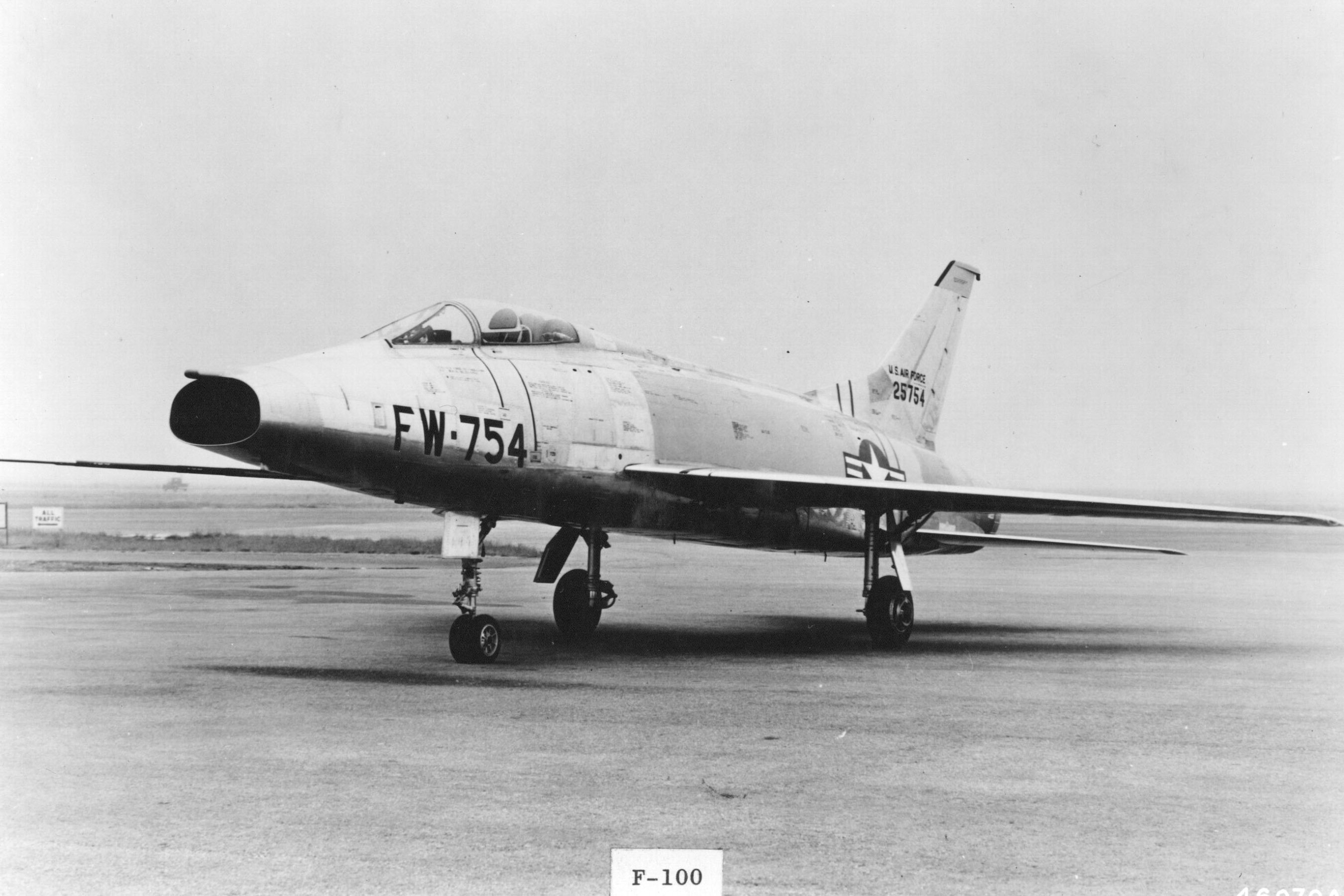
The YF-100A (52-5754) was made a gift to the Cadet Wing upon its retirement. Since arriving at Lowry, it had been stored in a Hanger pending completion of the hardstands at the display site in front of the academic buildings. The hardstands had been completed for quite some time at this point, and everyone was not inclined to wait patiently for the wheels of Lowry beaurocracy to grind sufficiently. Hence the mission: get the YF to its proper position NOW!
So, the Chevy, with the bird in tow, was approaching the active runway. The Chevy stopped short of the active, turned to face the tower, and flashed its headlights--the customery way for ground vehicles to ask permission to cross the runway. The tower (who knows whether they had been clued in about the "mission?") flashed a green light, and the Chevy resumed its original path.
With the runway safely and legally crossed, we were told that our job was to walk the wings to ensure that there was adequate clearance as the taxiway narrowed to become the road leading to the academic buildings. And to lend whatever aid we could until the "mission" as accomplished. At this point, we also noticed that Jim Anderson was in the cockpit. His job was to apply the brakes if needed. The procession continued.
At this point, let's recap: Some "off-duty guys" in a civilian Chevy convertible had gone from the Cadet Area to a hanger on the Lowry flight line (we had heard that it was the "classified hanger," but I can't confirm that as fact). Somehow they had gained access to said hanger, hooked the Chevy to the YF's nose strut, installed Jim Anderson in the cockpit, and towed the YF across the ramp to and down the taxiway to the active runway, where they asked for and received permission to cross and did. And nobody had noticed any of this, or if they had, assumed that it was normal normal. Wow! But I digress.
So the merry band of aircraft thieves (well, ... after all it was OUR airplane) proceded to and along side of the academic buildings, made the left turn onto the road between the academic complex and the parade field, and got the Chevy and the YF up and over the curb and on the grass. Then they maneuvered the bird into position and ready to try to get it up on the hardstands. All of this was no easy task mind you. Then we heard the sirens!
Everyone scattered. The Chevy departed very abruptly, and those afoot beat a hasty retreat back to the dorms. Whew!
But wait! What about Jim Anderson? Yep. He was still in the cockpit. He hunkered down and waited 'til the coast was clear. Then he escaped and returned to safety.
As far as I know, nobody ever got into any trouble (well, ... serious trouble). The "mission" was a success; the YF was soon properly moored in its place of honor until it was time to move to the permanent site.
________________________
This sketchy tale is told with full awareness that it might have happened slightly differently. If anyone reads this and can amplify and/or correct the details, please do so. But it did happen. Of that I am certain.